

Overview
Advanced Sound Meter Technology
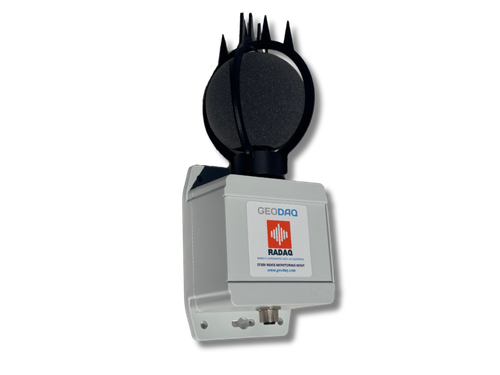
The ST500 is a compact, high-performance digital sound level meter designed for unattended, continuous, real-time outdoor noise monitoring. It is well suited for construction, infrastructure, industrial, and environmental applications that require accurate sound level measurements, reliable operation, and immediate reporting. The ST500 delivers precision noise measurements with frequency response performance consistent with ANSI/IEC Class 1 handheld meters, while reducing cost and power consumption for long-term remote deployments.
Construction Noise Monitoring
The ST500 is part of the RADAQ Remote Automated Data Acquisition system, a distributed monitoring platform for remote field instrumentation. The ST500 provides precision outdoor noise monitoring with real-time reporting of common construction noise metrics, including Lmax, Lmin, Leq, and Lpeak. Measurements are supported with selectable A, C, or Z frequency weighting and selectable FAST or SLOW time response. Reporting intervals are remotely configurable from 1 second to 60 minutes. The ST500 also supports audio recording segments that can be remotely reviewed and played back through the web application.
Performance
Typical ST500 acoustic performance has been evaluated using laboratory calibration in general conformance with IEC61672-2002-Class 1 using a sampling frequency of 48kHz. The calibration test results include free-field frequency response and frequency-weighting response. The measured free-field frequency response is compared with ANSI/IEC Class 1 frequency-response tolerance limits to demonstrate the ST500 sound level measurements are consistent with Class 1 frequency-response expectations over the tested frequency range.
Frequency Response
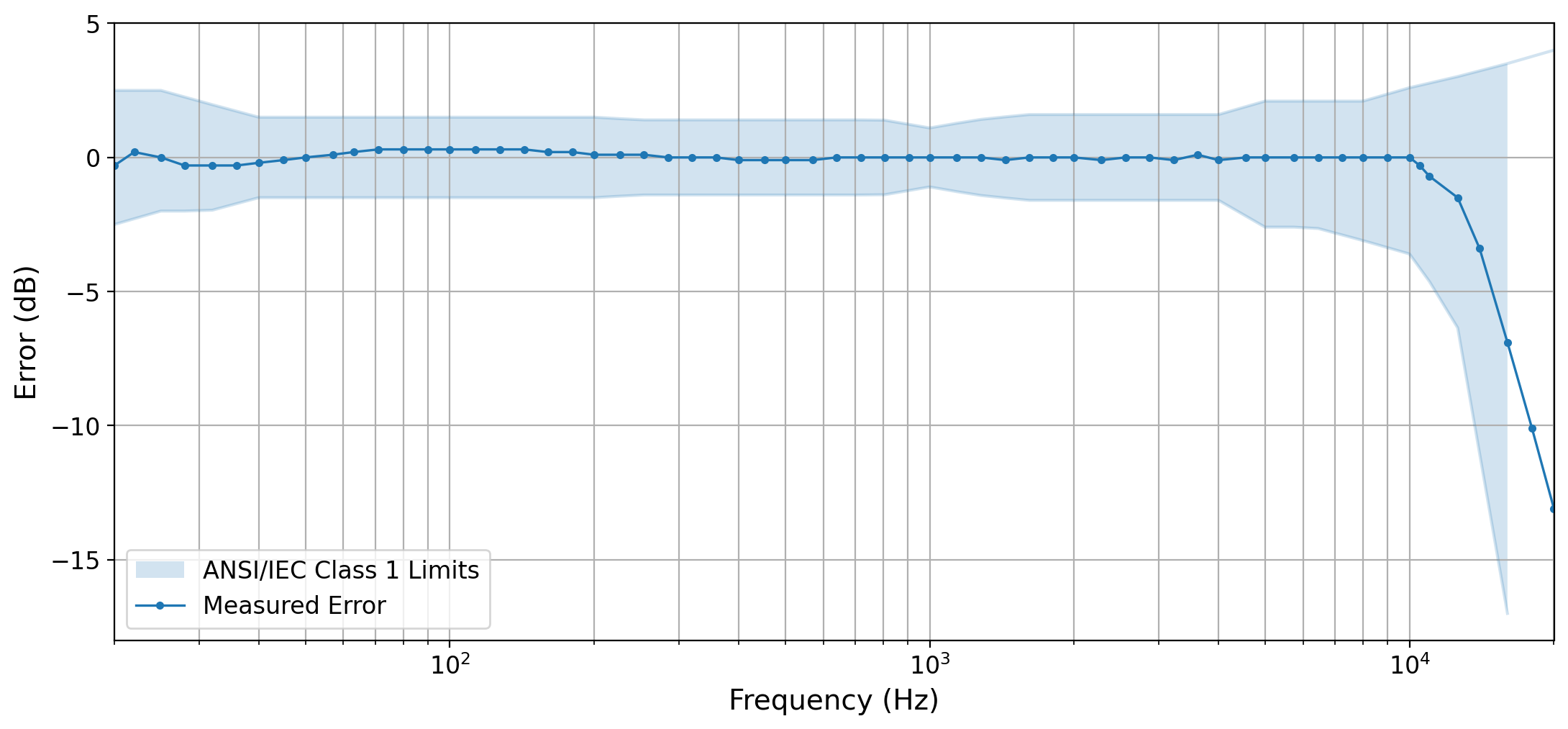
ST500 Sound Level Error versus Frequency (A-Weighting)
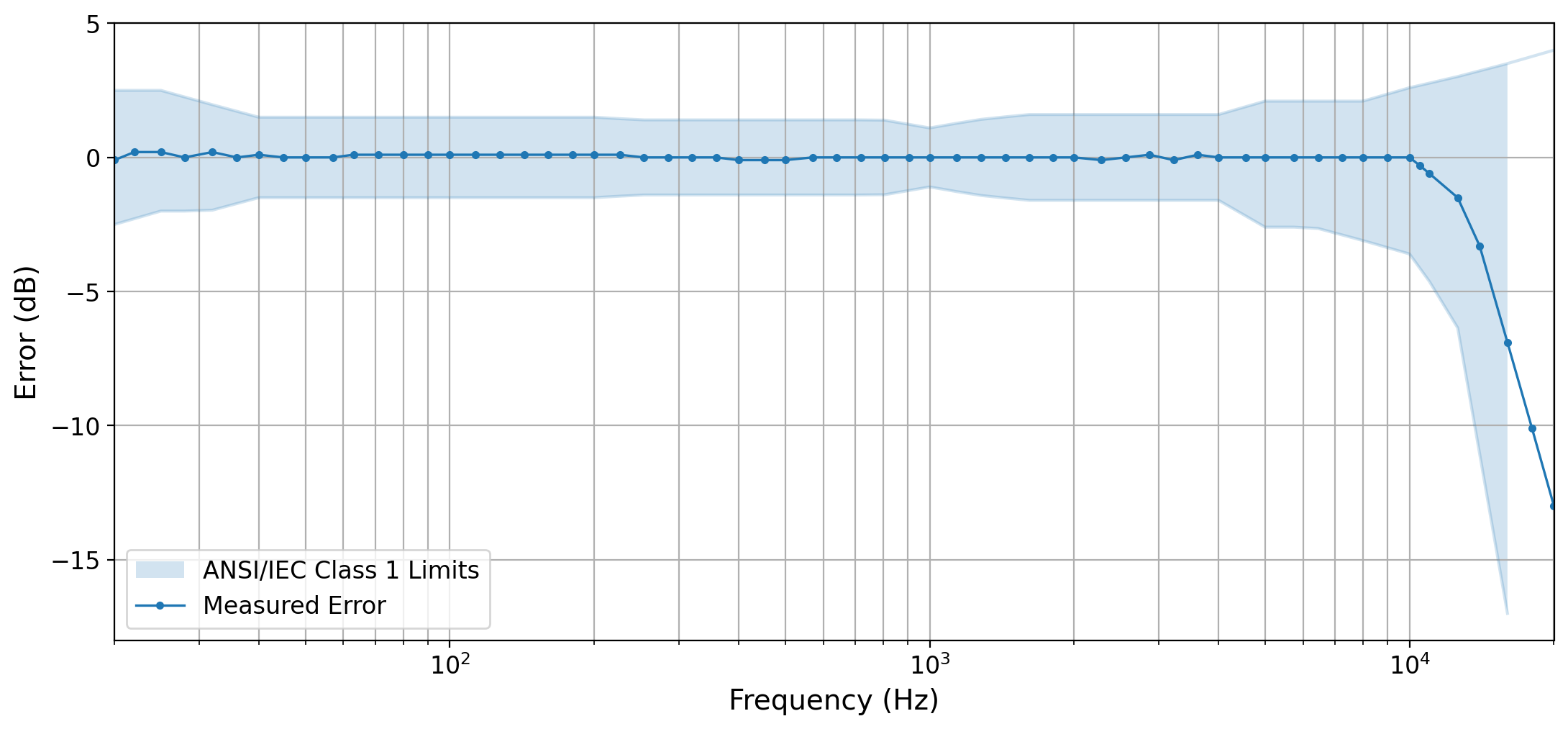
ST500 Sound Level Error versus Frequency (C-Weighting)
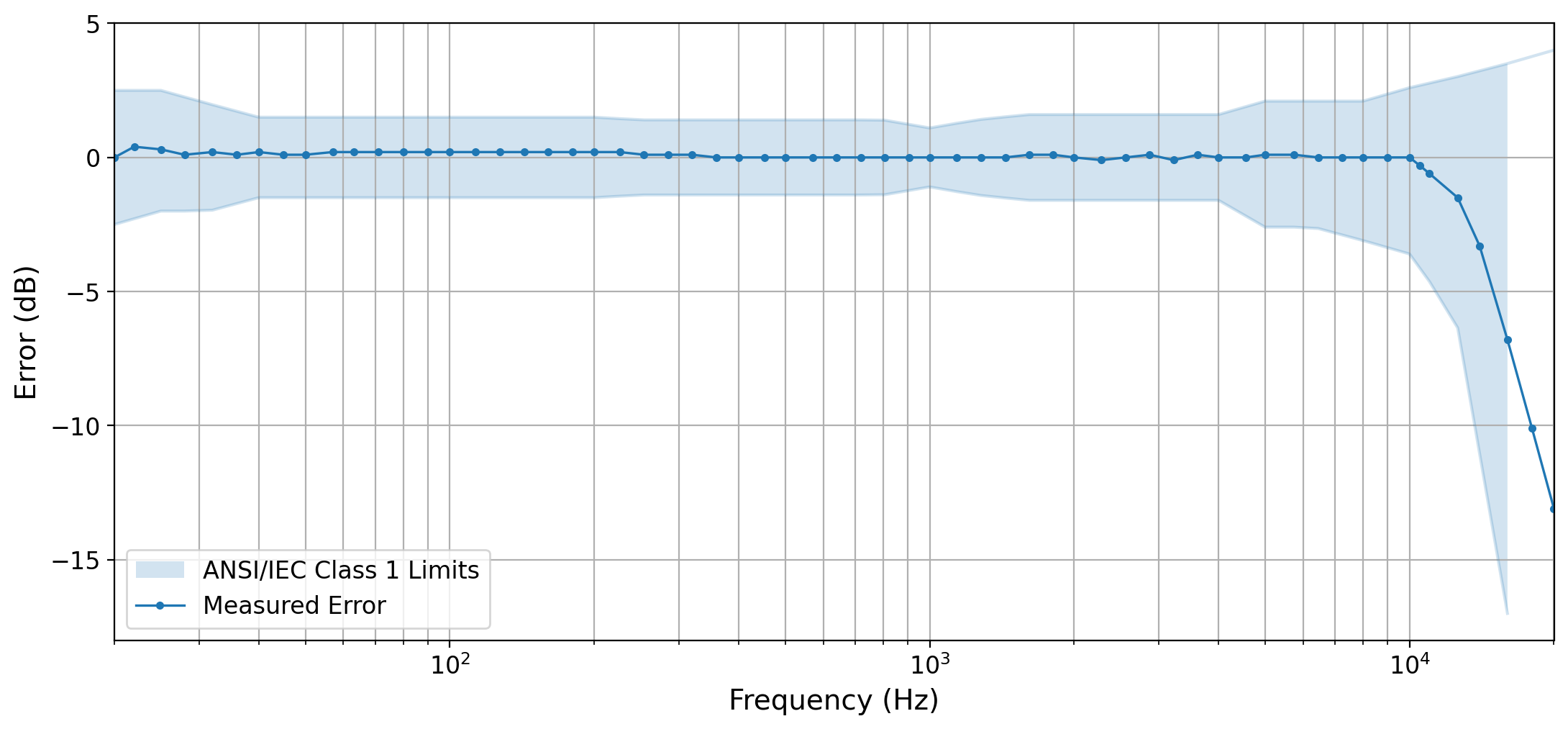
ST500 Sound Level Error versus Frequency (Z-Weighting)
The ST500 has been evaluated using end-to-end acoustic linearity testing in a calibrated coupler at 1 kHz and 8 kHz. Unlike electronics-only verification, this test exercises the complete acoustic measurement chain, including the microphone, signal conditioning, digital processing, and reported sound level output. The resulting measurements provide a representative verification of real-world response for outdoor noise monitoring applications.
Linearity
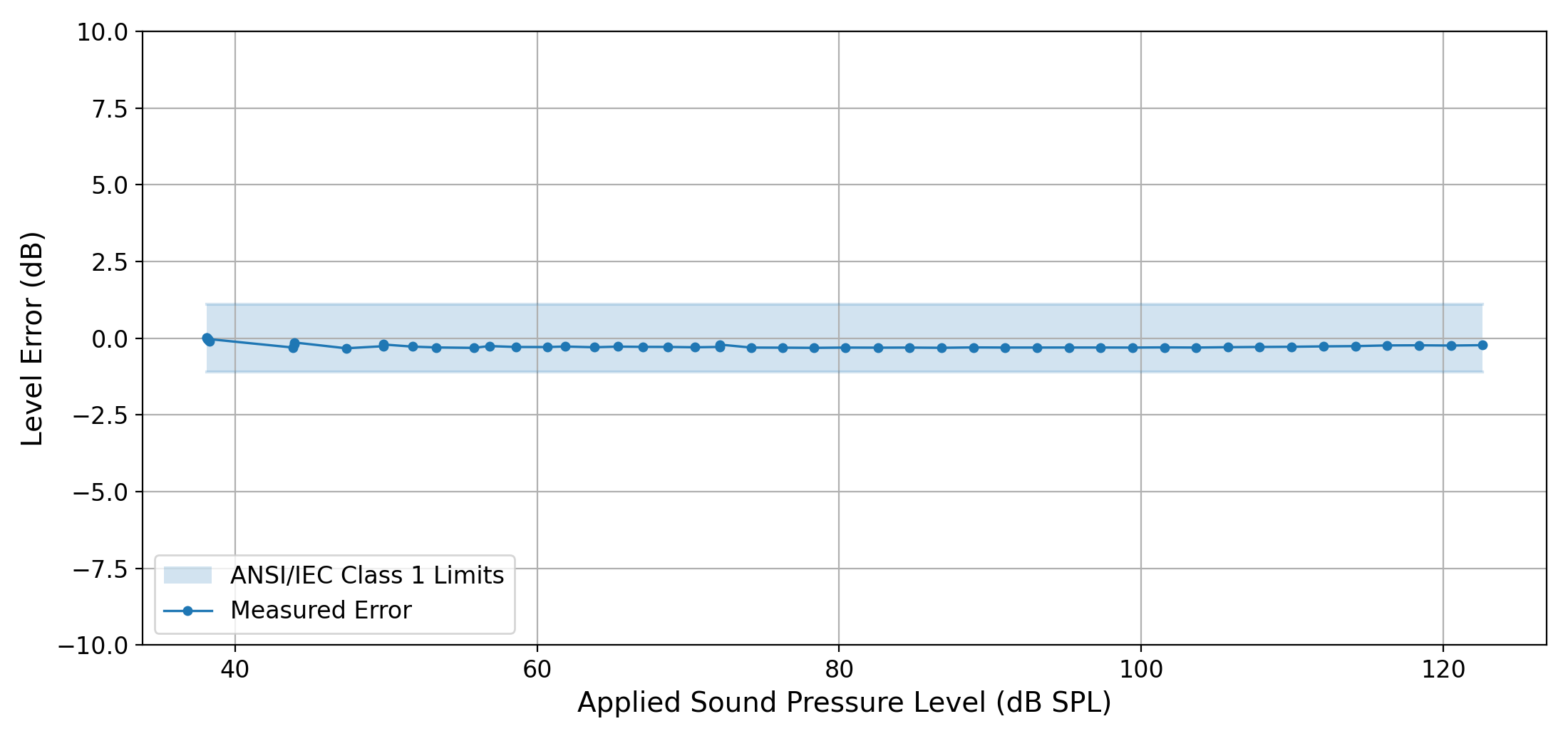
ST500 Sound Level Error versus Applied Sound Pressure Level (1kHz)
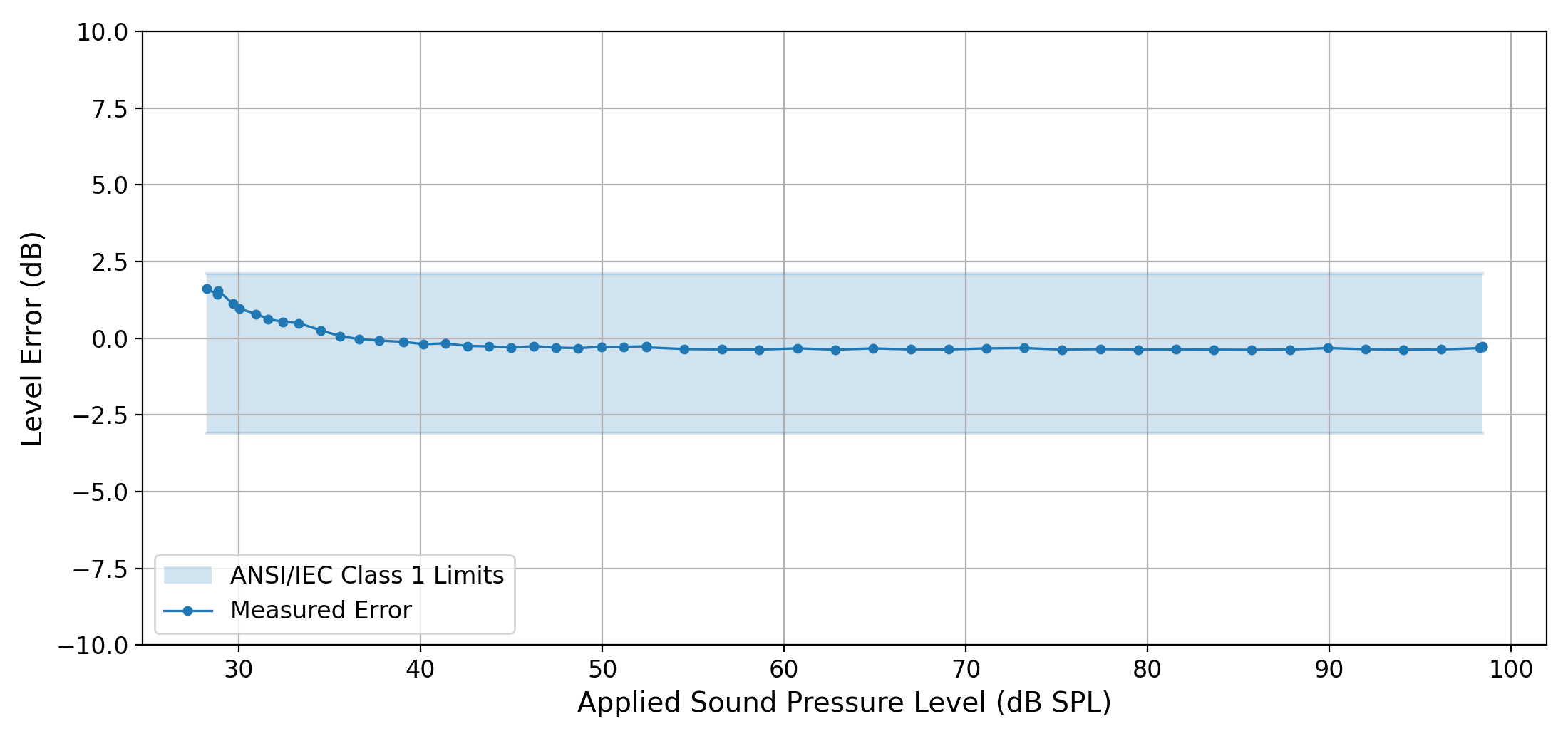
ST500 Sound Level Error versus Applied Sound Pressure Level (8kHz)
Rugged Field Deployment
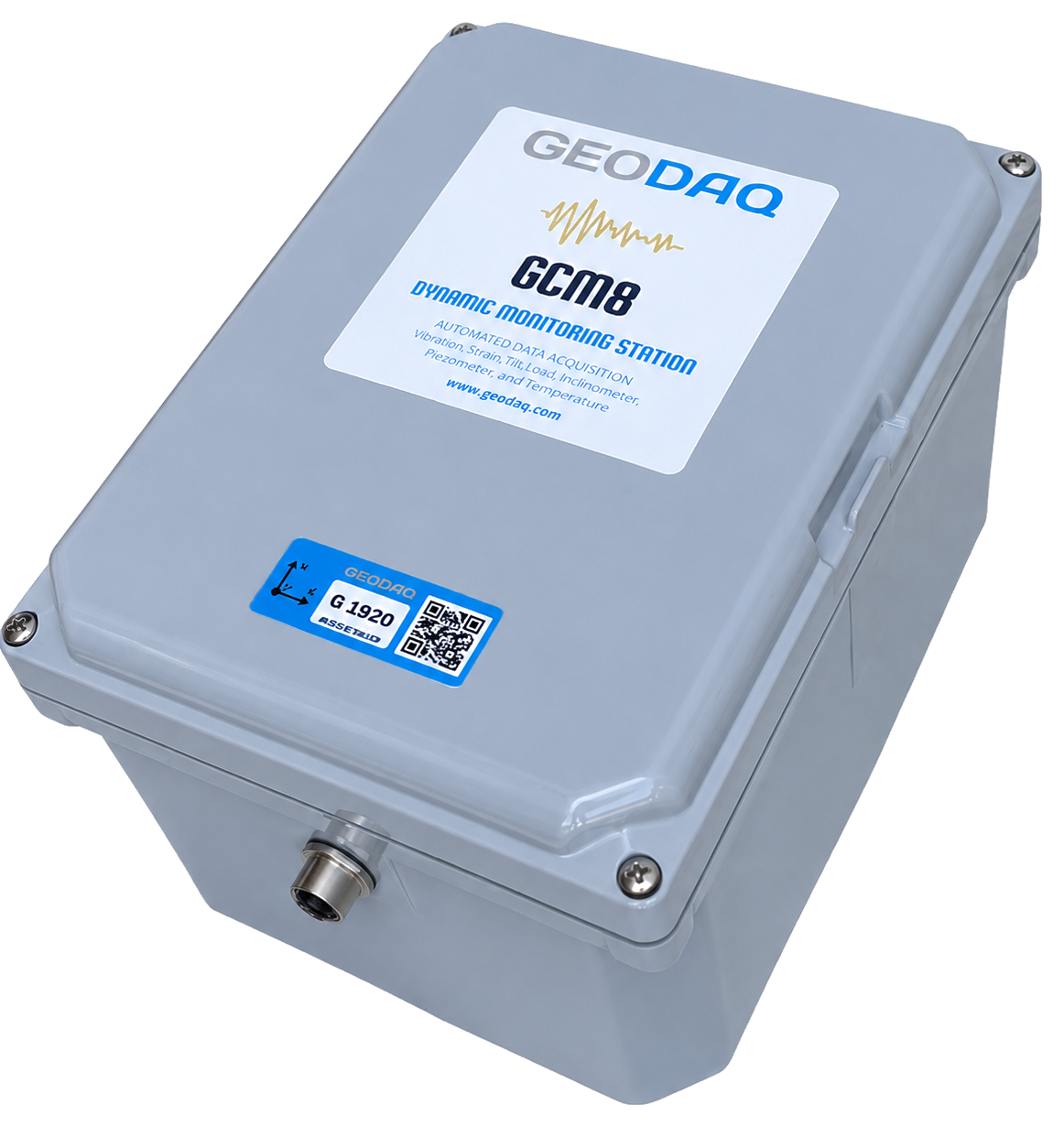
The GCM8 Dynamic Monitoring Module is a remotely controlled, automated data acquisition system with integrated 4G LTE cellular communications and multi-channel, high-speed sensor inputs. Each GCM8 can interface with multiple RADAQ modules for simultaneous monitoring of vibration, noise, and air quality. The GCM8 enclosure is rated NEMA 6P / IP68 and measures 6 in. × 8 in. × 4 in. One tri-axial geophone may be mounted internally within the GCM8 enclosure, or up to three tri-axial velocity sensors may be connected externally to monitor multiple vibration locations. Precision noise monitoring can be added by connecting the ST500 Module. Air quality monitoring can be added using the AQ2 Module, which supports measurement of particulate matter, VOCs, NOx, humidity, and temperature. Both the ST500 and AQ2 connect to the GCM8 using waterproof cable assemblies with removable circular connectors.
Our remote monitoring station integrates vibration, noise, and air quality monitoring with a battery and solar power system. The station is a self-contained unit designed for continuous, unattended monitoring at active construction sites. It operates 24 hours per day, 7 days per week, continuously measuring construction vibration, noise, and air quality conditions while transmitting results to a secure cloud server. Project teams can remotely access the data for compliance tracking, documentation, and timely review of site conditions. The robust, standalone design allows the station to be placed where monitoring is needed while minimizing installation time, site disruption, and maintenance requirements.
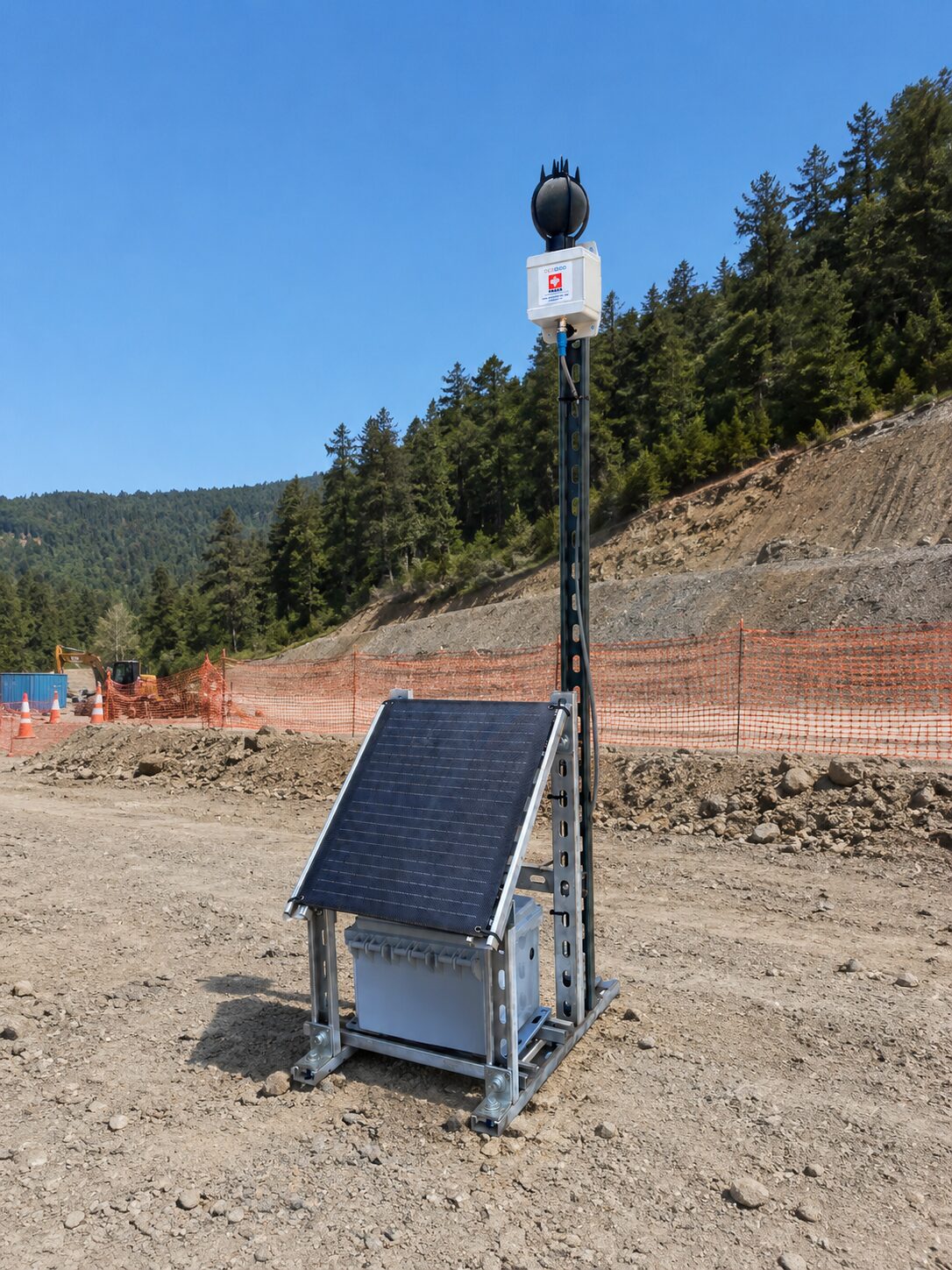
Portable Remote Monitoring Station with Solar Power System